
Stories · Even the greats
Mickelson at Winged Foot: choose the club that stays in play
By The First 9 Team ·
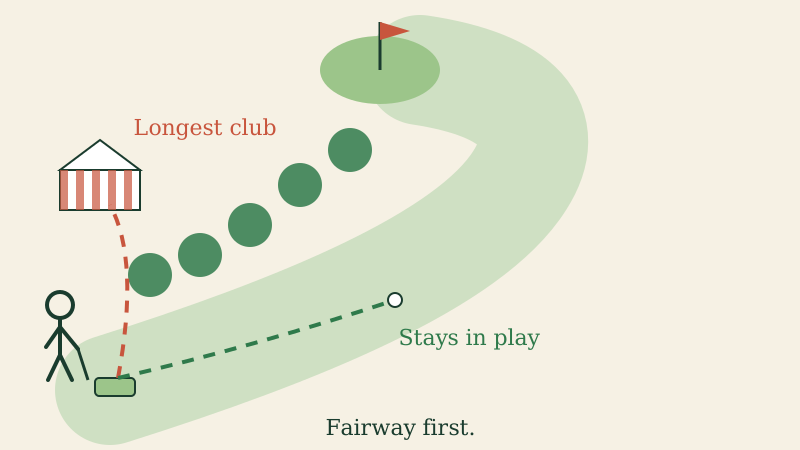
Phil Mickelson needed a par on the 72nd hole to win the 2006 U.S. Open at Winged Foot. He chose driver, the ball hit a hospitality tent and then a tree, and he made a double-bogey 6 to finish one shot back. The beginner lesson: choose the club that keeps the ball in play, not the one that goes the farthest.
Even the greats: the 18th at Winged Foot
In June 2006, Phil Mickelson was one of the best players in the world and on a remarkable run. He had won the 2005 PGA Championship and the 2006 Masters, and a U.S. Open win would have made it three major titles in a row.
On the 72nd tee at Winged Foot, he needed a par to win or a bogey to reach a playoff. The 18th is a tight dogleg left with trees down the left side. Mickelson pulled driver. His tee shot went left and bounced off a hospitality tent. His second, trying to curve around the trees, struck a tree and didn’t go far. His third plugged in a greenside bunker, and he made a double-bogey 6.
He wasn’t alone that afternoon. Colin Montgomerie also made a 6 on the 18th from the middle of the fairway, and Jim Furyk missed a short par putt there. Geoff Ogilvy got up and down for par on the last to win at five over par, one ahead of all three.
Mickelson was very hard on himself afterward, as many of us would be. Golf was kinder to him later: he won The Open at Muirfield in 2013 with a closing 66.
Your first-nine lesson: fairway first, distance second
On your first nine, the longest club in the bag is usually the hardest one to keep straight. That’s why most beginners don’t need a driver at all. You have permission to choose the club that keeps your ball on the short grass:
- On tight holes, tee off with something shorter. A 52° or 56° that goes straight is better than a long club that finds the trees.
- Look at where trouble is, then aim away from it. Pick a target on the wide side of the fairway.
- From the trees, take the easy way out. Chip sideways back to the fairway. It’s one shot, and it keeps the big numbers away.
- If a ball is lost, follow the simple rule and keep walking. Drop, add your shot and move on.
Our do beginners need a driver? guide explains why you can leave it out for now. If a ball does wander, lost ball rules for beginners keeps it simple and calm.
Watch or read the official account
Get the free intro
One email. A short PDF. Clear next steps.
Want the full path for free? Free Getting Started guides
Related guides
- Do beginners need a driver?
- Lost ball rules for beginners
- Golf hazards for beginners
- How to play a par-3 nine
- More “even the greats” stories
- Start here
Sources
- USGA, 2006 U.S. Open championship archive
- PGA TOUR, “Phil Mickelson wasn’t the only one to make a mess of Winged Foot’s 18th”
- Los Angeles Times, “Double Trouble Leaves Bad Taste for Mickelson”
- GOLF.com, Winged Foot oral history
- The Open, “142nd Open, Muirfield 2013”
Facts are taken from the official and news sources above. Players are named with respect; no player photos or video are used on this page.